GeneralBreaking NewsBreakingLatest News
India's Aditya-L1 Discovers Solar Eruption Secrets Challenging Old Assumptions
Sentiment: NeutralHigh Priority
What Happened?
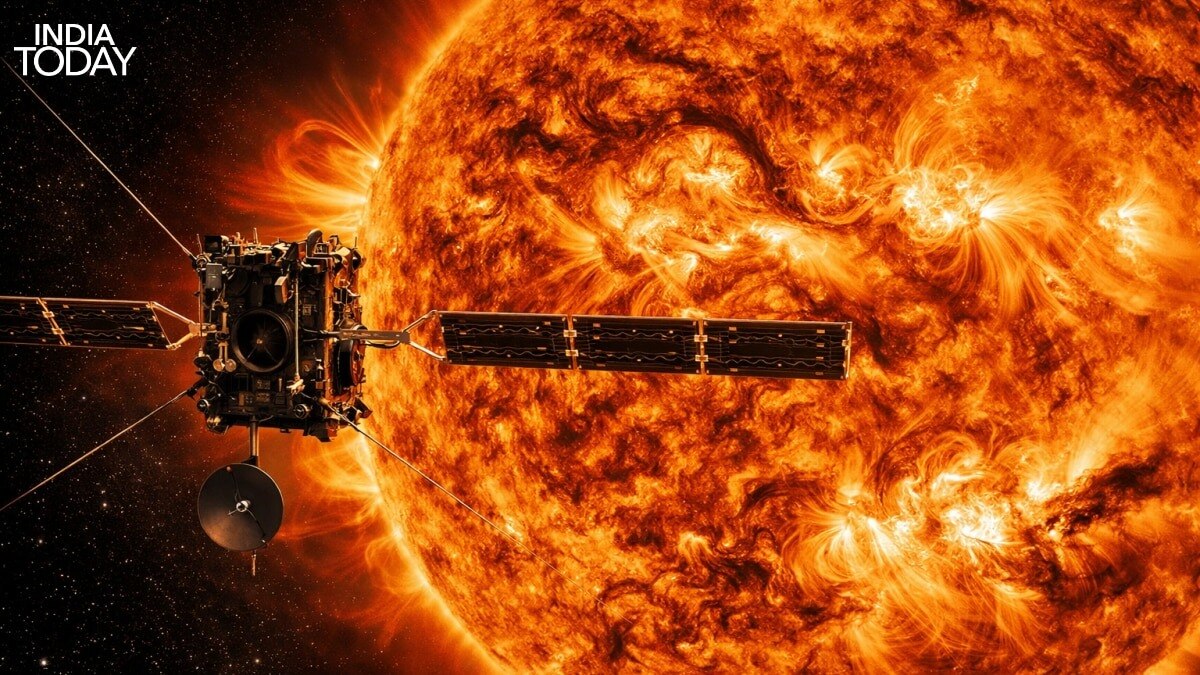
India's Aditya-L1 spacecraft has revealed that solar eruptions may not expand uniformly, challenging previous models. This finding could enhance space-weather forecasting.
Key points
- Aditya-L1 observed a solar eruption on August 5, 2024, expanding unevenly.
- The findings challenge the assumption that coronal mass ejections (CMEs) expand uniformly.
- Researchers used Doppler spectroscopy to analyze plasma movement during the eruption.
- The study was published in The Astrophysical Journal Letters.
- Aditya-L1's observations could improve predictions of CMEs affecting Earth.
- Asymmetric eruptions may alter interactions with solar wind.
Key insights
- Understanding asymmetric solar eruptions may lead to better space weather preparedness.
- Improved CME tracking could protect satellites and communication networks.
- The findings may prompt further research into solar dynamics and their effects on Earth.
Why it matters
This discovery could enhance our understanding of solar eruptions and improve space weather predictions.
Tags
Entities
Aditya-L1· TechnologyIndian Institute of Astrophysics· OrganizationNASA· OrganizationThe Astrophysical Journal Letters· Event
Source
India Today