GeneralTop StoryTop StoryLatest News
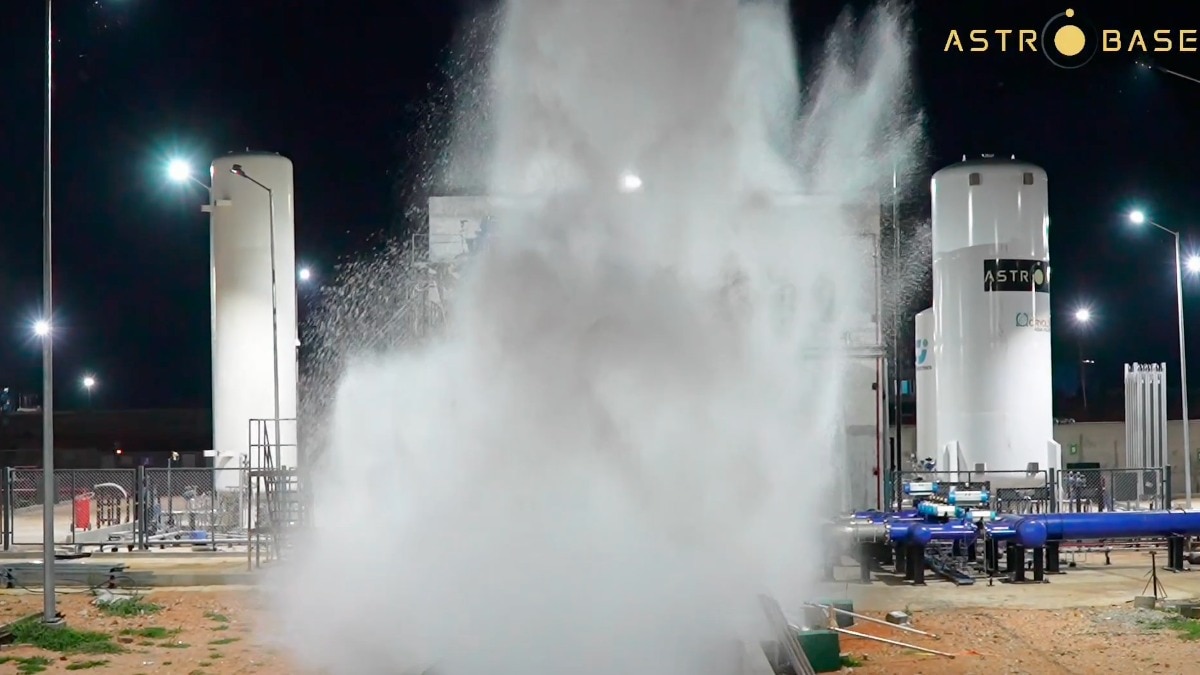
Astrobase Tests Water Deluge System Ahead of EVEREST Rocket Engine Firing
Sentiment: NeutralHigh Priority
What Happened?
Astrobase is qualifying a water deluge system for its EVEREST rocket engine's hot-fire tests. The system will use about one tonne of water per second to suppress acoustic energy during ignition.
Key points
- Astrobase is testing a water deluge system for its EVEREST rocket engine.
- The system will require approximately one tonne of water every second during tests.
- This translates to nearly 1,000 liters of water per second.
- The water helps absorb acoustic energy produced during engine ignition.
- EVEREST is an 800-kilonewton, 80-tonne-class rocket engine developed in Bengaluru.
- The engine uses liquid oxygen and liquid methane as propellants.
Key insights
- The successful qualification of the water deluge system could enhance the safety of future rocket tests.
- This milestone indicates progress in India's private space sector's capabilities.
- The EVEREST engine's design reflects advanced engineering in rocket propulsion.
Why it matters
The water deluge system is crucial for safely testing powerful rocket engines, ensuring the protection of sensitive equipment.
Tags
Entities
Astrobase· CompanyEVEREST· ProductBengaluru· CityAndhra Pradesh· StateIndia· Country
Source
India Today